A surgical procedure can begin with a quiet, practical problem: a missing instrument, an opened drawer, or a pack arranged for the wrong task. These small delays matter in a clinic, where staff must prepare patients, maintain clean working areas, and coordinate each step. A well-designed veterinary surgical pack groups commonly needed instruments and supplies in a consistent, ready-to-check format. It can make preparation more predictable. Small details matter.
So, why do veterinary clinics need specialized surgical packs? Veterinary teams work with patients of different species, sizes, and clinical needs. A pack for a routine procedure may not suit a dental case or a larger animal. Thoughtful selection helps staff match instruments to the procedure, reduce unnecessary handling, and notice missing or damaged items before use. The right contents depend on the clinic’s services, equipment, and established protocols—not simply on the number of tools in a tray.
This 2026 guide explores what top veterinary surgical packs may include, how clinics can compare designs, and what to consider when choosing a pack. Material quality, clear organization, sterilization compatibility, and dependable supply all deserve attention. These features support efficient preparation, but they do not guarantee a successful outcome. Staff still need appropriate training, careful inspection, and sound clinical judgment. No pack is perfect. Clinics should review what they actually use, ask their teams where delays occur, and revise choices when practice needs change. A little reflection can prevent a costly mismatch.
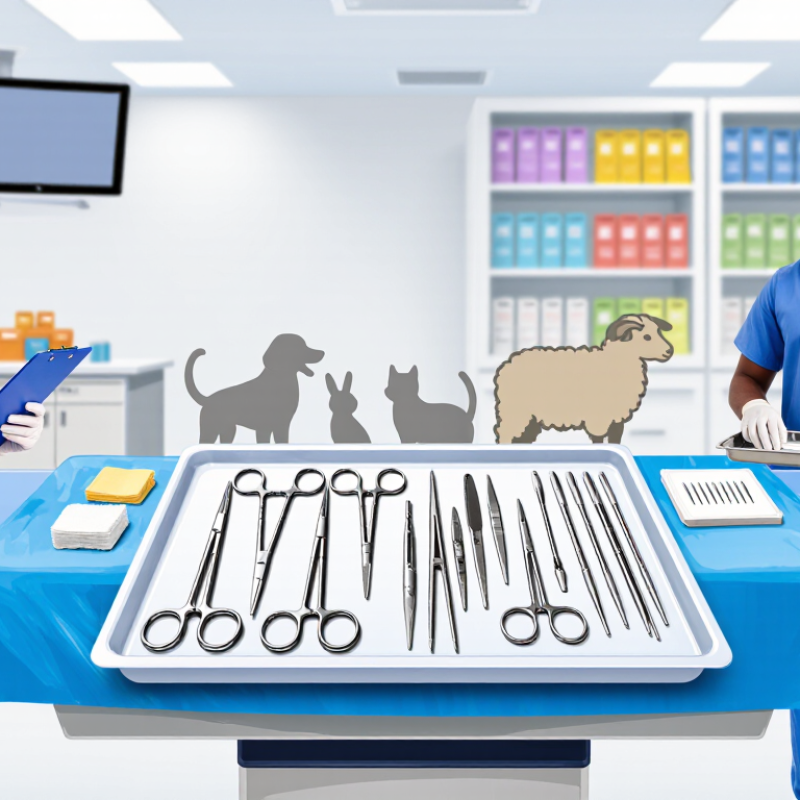
2026 Top Vet Surgical Packs: What They Are and What They Contain
A veterinary surgical pack is a prepared set of sterile supplies for a specific procedure. It helps staff gather essentials before a patient enters the operating area. A routine soft-tissue pack may include a scalpel handle, scissors, forceps, needle holders, towels, drapes, gauze, and a small bowl. Specialty packs may add instruments suited to orthopedic, dental, or ophthalmic work. Contents should match the procedure and the surgeon’s preference; one standard pack rarely fits every case.
Packs may be assembled from reusable instruments and sterile textiles, or supplied as single-use sets. Their value depends on correct cleaning, packaging, sterilization, and storage—not just neat arrangement. The CDC’s Guideline for Disinfection and Sterilization in Healthcare Facilities recommends biological indicators at least weekly for sterilizers, and for every load containing implants. This gives clinics a clear monitoring benchmark. A well-packed tray is useful, but it cannot replace process checks.
Tips: Confirm the pack label and procedure before opening. Check the seal, dryness, and indicator, then arrange instruments on a clean field. A tidy pack can still be the wrong pack; that is an easy detail to overlook.
A veterinary surgical pack groups instruments and supplies for a specific procedure, helping the clinical team prepare a consistent workspace. During a routine spay, staff may arrange a scalpel handle, tissue forceps, hemostats, needle holders, and sterile drapes before the patient enters the operating area. This can reduce interruptions and make setup easier to check. Small details matter.
For wound repair, a pack might contain forceps, scissors, needle holders, and instruments suited to handling tissue and closing an incision. Dental procedures often call for a different selection, such as elevators and extraction forceps. Packs should match the procedure and the veterinarian’s preferences; one standard set may not fit every patient or technique. That takes judgment.
A pack supports preparation, but it does not replace careful checks. Before use, staff should inspect the package, confirm its sterility indicators, and verify that instruments are present and functioning. A missing clamp can disrupt a workflow, even when the rest of the pack is well arranged. Packs also need appropriate cleaning, sterilization, and storage between uses, following clinic protocols. In practice, teams may still adjust contents as procedures change, and that variation deserves review rather than assumption.
Reliable, procedure-specific packs help veterinary teams prepare with fewer interruptions. A spay pack, for example, may contain the instruments, drapes, and gauze commonly needed for that procedure. Staff can check the contents before the patient enters the room, instead of searching drawers during setup. That small pause matters.
Consistent pack layouts make it easier to spot a missing clamp or an unexpected substitute. They can also help newer team members learn where tools belong. Still, no pack fits every patient or surgeon. The attending veterinarian should confirm that its contents suit the planned procedure and the clinic’s protocols.
Reliability depends on more than what is inside. Packs need clear labels, intact packaging, and appropriate sterilization and storage checks. A simple count sheet can help, though it may become outdated when instruments change. Review it with the people who use the pack, and record recurring omissions. Even careful systems need adjustment. A pack that saves time for one operation may create clutter for another.
Choosing a surgical pack starts with the procedure, not a catalogue. A routine spay pack needs reliable tissue handling and suturing instruments; an orthopedic case may require dedicated retractors and heavier instruments. Match instrument size to the patient, too. Tiny jaws can make work on a large dog frustrating, while bulky tools can crowd a feline field. Keep the pack focused. Unused instruments still need inspection, cleaning, and sterilization.
Patient safety depends on the whole perioperative workflow, not the pack alone. A large UK study by Brodbelt and colleagues reported anesthesia-related mortality within 48 hours of 0.17% in dogs and 0.24% in cats. The study appeared in Veterinary Anaesthesia and Analgesia in 2008. These figures are historical, and they do not show that a particular pack changes risk. They do underline why preparation, monitoring, and recovery planning deserve attention.
Clinics can review procedure logs and ask surgeons which instruments are consistently used, missing, or awkward to handle. Then compare pack contents with the clinic’s sterilization capacity and documented reprocessing instructions. Check hinges, alignment, and visible soil before use. A standard pack can save setup time, but forcing every case into one set is not always sensible. I would revisit the contents after real cases; staff preferences can differ, and a tidy checklist may still miss a practical problem.
Surgical packs group commonly used instruments and supplies for a procedure or service area. They can help teams prepare consistently and reduce last-minute item gathering. Pack contents are not standardized, so match each pack to the clinic’s protocols, patient, procedure, and sterilization process.
| Pack Type | Typical Clinical Need | Common Contents | How to Choose | Why It Can Help |
|---|---|---|---|---|
| General soft-tissue pack | Routine soft-tissue procedures, such as mass removal or abdominal surgery. | Commonly includes a scalpel handle, tissue forceps, hemostats, scissors, needle holders, and basic retractors. Exact instruments vary by pack. | Check that the instrument types and quantities suit the procedures performed. Confirm the instruments are appropriate for the patient size and the surgeon’s technique. | Provides a consistent starting set of instruments for routine procedures and supports predictable setup. |
| Spay and neuter pack | Ovariohysterectomy and castration procedures in dogs or cats. | May include small-to-medium hemostats, tissue forceps, scissors, needle holders, and procedure-specific instruments selected by the clinic. | Choose a configuration suited to the species and range of patient sizes. Verify that any specialized instrument included is familiar to the surgical team. | Helps organize frequently used instruments for high-volume routine procedures. |
| Dental pack | Oral examination, dental cleaning, and dental extractions. | May contain a mouth mirror, periodontal probe, dental elevators, luxators, extraction forceps, and other instruments appropriate to the planned work. | Match the instrument selection to the expected procedure and species. Inspect working ends for wear, damage, or loss of sharpness before use. | Keeps dental instruments together and makes it easier to prepare a dental procedure area. |
| Orthopedic pack | Selected bone and joint procedures, often alongside procedure-specific implants and equipment. | May include bone-holding forceps, elevators, retractors, periosteal instruments, and other orthopedic instruments. Implant systems and power tools are usually selected separately. | Build the pack around the planned procedure and compatible equipment. Confirm required sizes, instrument condition, and availability of any separate implants or tools. | Supports organized preparation for procedures that require specialized instruments and coordinated equipment. |
| Ophthalmic pack | Selected eye and periocular procedures requiring delicate instruments. | May include fine forceps, small scissors, delicate needle holders, and other instruments intended for precise work. | Select instruments designed for delicate procedures. Check alignment, tips, and moving parts carefully; keep these instruments protected from damage. | Separates fine instruments from heavier sets and helps protect delicate working ends. |
| Wound repair pack | Selected laceration repairs and other procedures involving skin closure. | May include tissue forceps, scissors, needle holders, hemostats, and basic instruments for wound preparation and closure. | Consider wound location, depth, patient size, and the clinic’s closure technique. Add procedure-specific supplies as needed rather than assuming they are included. | Offers a practical setup for common repair work while allowing the team to add supplies for each case. |
Selection and processing check: Confirm the pack’s item list, packaging integrity, sterilization method, and the manufacturer’s validated processing instructions. Follow the clinic’s infection-prevention protocols and applicable veterinary standards; a pack does not replace procedure-specific planning or staff training.
A veterinary surgical pack is ready only when every instrument has been cleaned, inspected, assembled, and sterilized correctly. Sterilization does not begin at the autoclave. After a procedure, staff should remove soil promptly and follow the instrument maker’s cleaning instructions and the clinic’s validated process. Hinges, serrations, and narrow joints deserve close attention, since residue can hide in small spaces.
Small details matter.
After cleaning, inspect each instrument under good light. Check for corrosion, loose handles, stiff joints, or damaged tips. An instrument that does not open smoothly may slow the team during surgery. It is easy to overlook minor wear during a busy shift; that is worth reflecting on. Remove questionable items for assessment rather than quietly returning them to the pack.
Arrange dry instruments so steam can reach their surfaces, then package and process them using the clinic’s validated cycle. Use the appropriate indicators and keep cycle records according to facility policy. Let packs dry and cool before handling. Store them in a clean, dry area away from sinks, floors, and heavy traffic. If a pack is wet, torn, opened, or its storage conditions are uncertain, treat it as compromised and reprocess it under clinic protocol. Regular checks help keep packs dependable, though no checklist replaces careful judgment.
It should include instruments, drapes, and gauze commonly needed for the planned procedure. A spay pack, for example, may hold tissue-handling and suturing tools. The veterinarian should confirm the contents fit the patient and clinic protocol.
Staff can check for a missing clamp before the patient enters the room. A familiar layout may also help newer team members find instruments. Small details matter.
No. Match instrument size and type to the procedure and patient. Tiny jaws may frustrate work on a large dog, while bulky tools can crowd a feline surgical field. One standard set may not suit every case.
Review procedure logs and ask surgeons which tools are used, missing, or awkward to handle. Compare the pack with the clinic’s cleaning and sterilization capacity. Staff preferences can differ, and a neat checklist may still miss a practical problem.
Check that its label is clear and packaging is intact. Inspect instruments for visible soil, corrosion, loose handles, stiff hinges, or damaged tips. Remove questionable items for assessment.
It begins after the procedure, not at the autoclave. Remove soil promptly and follow the instrument instructions and the clinic’s validated process. Pay close attention to hinges, serrations, and narrow joints. Easy to overlook.
Dry instruments should be arranged so steam can reach their surfaces. Package and process them using the clinic’s validated cycle, appropriate indicators, and recordkeeping policy. Let packs dry and cool before handling.
Treat a wet, torn, or opened pack as compromised. Reprocess it under clinic protocol if storage conditions are uncertain. A checklist helps, but it cannot replace careful judgment.
Veterinary surgical packs bring together the instruments and supplies needed for a particular operation, helping teams prepare efficiently and keep essential items organized. Their contents may vary according to the procedure, from routine soft-tissue surgery to more specialized clinical work. Well-planned packs can support a consistent workflow, reduce time spent gathering equipment, and help staff focus on patient care.
So, why do veterinary clinics need specialized surgical packs? Procedure-specific options make it easier to match equipment to the task, the animal, and the clinic’s needs. When choosing packs, clinics can consider the procedures they perform, instrument preferences, pack size, and how often each pack is used. Careful cleaning, inspection, sterilization, and appropriate storage help maintain instruments and ensure packs are ready when needed. By selecting and maintaining packs thoughtfully, clinics can support organized, dependable surgical preparation.

NW Medical