In the healthcare industry, understanding personal protective equipment is crucial. This is especially true when it comes to surgical gowns. Healthcare professionals often ask, "what is the difference between AAMI Level 3 and Level 4 gowns?" Each level serves a specific purpose and offers different protection levels.
AAMI Level 3 gowns provide moderate protection. They are ideal for procedures with a risk of exposure to fluids. These gowns often feature water-resistant properties. In contrast, AAMI Level 4 gowns offer high-level protection. They are designed for high-risk situations, such as surgical operations or procedures involving heavy fluid exposure.
Knowing these differences helps healthcare workers choose the right gown for the task at hand. It’s essential to evaluate the specific environment and potential hazards. Not understanding these distinctions can lead to inappropriate choices, risking safety. Both types of gowns are vital, but their effectiveness depends on proper application.
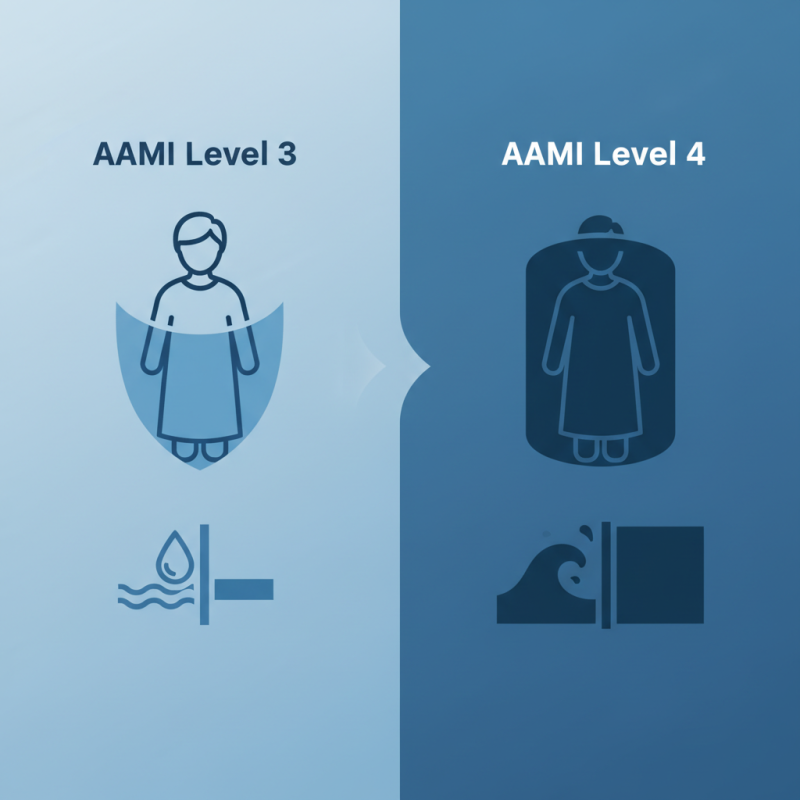
AAMI levels are crucial when discussing medical gowns. They define the protective standards necessary in various healthcare settings.
AAMI Level 3 gowns offer barrier protection against moderate risk. They are suitable for procedures such as blood draws or IV placements.
These gowns resist penetration by fluids, but they aren’t completely impermeable.
AAMI Level 4 gowns provide a higher level of protection. They are designed for use in surgical settings and areas with high fluid exposure.
These gowns are compliant with stringent testing for fluid resistance. They can withstand more intense criteria than Level 3 gowns.
AAMI Level 4 gowns help safeguard healthcare professionals during invasive procedures.
Understanding these levels helps in selecting the right gown. It's essential to assess the risks involved in each procedure. Not all settings need the highest level of protection.
Sometimes, choosing a Level 3 gown may suffice. Reflecting on these distinctions can lead to better safety practices in healthcare.
When discussing AAMI Level 3 gowns, understanding their key characteristics is essential for various healthcare settings. These gowns provide a significant barrier against liquids, making them suitable for moderate risk procedures. They are made from materials that are both breathable and resistant to fluids. This combination allows healthcare professionals to maintain comfort while ensuring protection.
Tips: Always check the gown’s labeling for compliance with AAMI standards. This ensures you select the right protection for your specific needs. Pay attention to the fit; an ill-fitting gown can compromise safety.
AAMI Level 3 gowns often feature reinforced seams and longer cuffs. These design elements enhance coverage and reduce the risk of exposure. While they serve a vital purpose, users must regularly evaluate their gown selection. Some may find it difficult to distinguish between levels, which could lead to unsuitable choices.
Tips: Regular training can help staff identify different gown levels. Understanding the context of use is critical. Reflect on your gown usage patterns and reassess periodically. Selecting the proper gown is not just about regulations; it's about safety and effectiveness in practice.
AAMI Level 4 gowns are designed for high-risk environments. They offer superior protection against liquid and viral penetration. These gowns are often made from advanced materials, featuring seams that are sealed to provide an extra layer of defense. Industry reports indicate that these gowns can withstand substantial pressure, making them suitable for surgical settings and infectious disease management.
In contrast, AAMI Level 3 gowns offer lower levels of protection. They are appropriate for moderate-risk tasks. While Level 3 gowns can resist some fluid exposure, they do not provide the same level of barrier as Level 4. Choosing the right gown depends on the specific task and risk assessment of the environment.
Tips for selecting the right gown:
Consider the nature of the procedure and the level of exposure risk. Ensure the gown fits properly to maintain its protective qualities. Pay attention to the manufacturer’s specifications and certifications. Understanding these details is crucial for ensuring safety and compliance in clinical settings. While AAMI guidelines are authoritative, continuous evaluation of gown performance is critical as new challenges arise in healthcare environments.
When analyzing the protection standards of AAMI Level 3 and Level 4 gowns, several critical factors emerge. Level 3 gowns offer a moderate level of protection. They are suitable for procedures where there is a risk of exposure to bodily fluids. These gowns are fluid-resistant but may not withstand heavy exposure. Their typical use includes outpatient procedures and some surgical interventions.
In contrast, Level 4 gowns provide a higher standard of protection. They are designed for situations with a significant risk of fluid exposure. These gowns are reinforced and often feature sealed seams. This design ensures greater barrier integrity. As a result, Level 4 gowns are essential in high-risk environments, such as operating rooms or during certain infectious disease outbreaks.
However, an important reflection arises regarding the choice between these gowns. It is crucial to assess the specific needs of each procedure. Selecting a gown that is too low-rated can compromise safety. Conversely, opting for a higher level without necessity may lead to unnecessary costs and waste. Thoughtful consideration of gown choice reflects both competence and responsibility in healthcare settings.
AAMI Level 3 and Level 4 gowns offer varying degrees of protection tailored to specific scenarios. Level 3 gowns are suitable for environments where moderate fluid exposure is expected, such as routine surgical procedures or when handling non-infectious patients. These gowns provide a barrier against blood, bodily fluids, and moderate splashes.
In contrast, Level 4 gowns are designed for high-risk situations. They are essential in settings like operating rooms or during procedures involving known infectious agents. The fabric used in Level 4 gowns is resistant to blood and viral penetration. This makes them ideal for healthcare workers dealing with serious infections.
Tips: Always assess the risk level of your environment to choose the appropriate gown. When in doubt, opt for a higher level of protection. Regular training on infection prevention can enhance safety practices. Additionally, ensure proper gown removal techniques to prevent contamination. Remember, awareness and preparation are key to safety.
This chart illustrates the recommended usage scenarios for AAMI Level 3 and Level 4 gowns, highlighting the differences in protection levels.
AMI levels for medical gowns?
Use Level 3 gowns for moderate risk. They suit tasks like blood draws and non-infectious patient care.
Level 4 gowns offer higher protection. They resist fluids and viruses, making them ideal for surgical use.
Assess the procedure's risk. Ensure a proper fit and review the gown's specifications for compliance.
No, Level 3 gowns resist some fluid but are not completely impermeable. Higher risks need Level 4 gowns.
Training improves safety practices and teaches proper techniques for wearing and removing gowns to avoid contamination.
Consider the risks involved and remember that not every procedure requires the highest level of protection.
Level 4 gowns are crucial in operating rooms and during procedures with infectious agents. They provide strong barriers.
Yes, continuously evaluating gown performance is essential as new challenges arise in healthcare environments.
When in doubt, choose a higher level of protection. Opting for more safety can prevent potential exposure.
This article explores the fundamental differences between AAMI Level 3 and Level 4 gowns, focusing on their protective standards. AAMI levels classify medical gowns based on their liquid barrier performance, with Level 3 providing moderate resistance to fluid penetration, making it suitable for procedures with a risk of exposure to blood and other bodily fluids. In contrast, Level 4 gowns offer a higher level of protection against heavy liquid exposure, ideal for high-risk scenarios such as surgeries or areas where aerosols are prevalent.
The analysis compares the key characteristics of both levels, emphasizing the critical factors that dictate their use in medical settings. Understanding what is the difference between AAMI Level 3 and Level 4 gowns helps healthcare professionals select the appropriate protective wear for various situations, ensuring optimal safety and compliance in their work environments.

NW Medical